
How to Plan the Perfect 10-Day Mauritius Family Itinerary for Three Generations
Anyone who has tried to plan a holiday for grandparents, parents and young children together knows the maths rarely works. The kids want to be in the water by 8 am. The parents want one uninterrupted hour with a book. Grandma would love to join the boat trip, but not if it means a wet rope ladder and a jump onto a beach. Someone always ends up compromising, and it is usually the person who organised the trip.
Mauritius is unusually well suited to solving this. The island is small enough that nothing is more than about ninety minutes from anywhere else, its lagoons are calm and shallow, English and French are spoken almost everywhere, and the culture is a genuine mix of Indian, African, Chinese and European influences that children absorb without being lectured. It is also one of the safest destinations in the Indian Ocean for families, with good private healthcare and reliable infrastructure.
But the destination alone does not make the holiday. After years of designing trips for extended families, we have found that the secret to a good 10-day Mauritius family itinerary is not filling every hour. It is pacing: alternating fully guided days, where a local expert handles everything, with entirely unscheduled days, where the family decides what it wants at breakfast. This post walks through how that model works, which experiences suit all three generations, where to base yourselves, and the practical questions we get asked most.
Why a ‘Paced’ Itinerary is Crucial for Multigenerational Travellers
Our three-generation itinerary follows what we call the 4+4 rule. Of the ten days, two are travel days at either end. Of the remaining eight, four are fully guided: a private driver-guide collects you from the villa, the day is planned in detail, lunch is booked, and you are home before the youngest gets overtired. The other four are entirely free. No transfers, no start times, no itinerary. You have the villa, the beach, the resort and the lagoon, and nobody needs to be anywhere.
We alternate them deliberately, so that no two guided days sit back to back. A full day out with a six-year-old and a seventy-year-old is rewarding, but it is tiring for both, and a free day in between lets everyone recover at their own speed.
The free days also solve the group-splitting problem. On a guided day, everyone travels together. On a free day, the grandparents can stay by the pool, the parents can take the children snorkelling in the lagoon or book a spa hour, and the teenagers can find the water sports centre. Nobody is dragged along, and nobody is left behind by default.
There is a seasonal reason for this structure too. Mauritius’s cyclone season runs from November to April. Cyclones themselves are rare and well forecast, but that period does bring more humid days and occasional heavy rain. With four free days built in, a wet morning simply becomes a villa day, and a guided excursion can be moved by 24 or 48 hours without unpicking the whole trip. A rigid day-by-day schedule has no such slack.
Unforgettable (and Accessible) Experiences for All Ages
We recommend the four guided days below most often for three-generation groups. Each includes some activity, none requires real fitness, and each connects genuinely to the island’s environment or culture rather than being an attraction built for tourists.
Mangrove Kayaking at Île d’Ambre
Île d’Ambre is an uninhabited island inside the lagoon off the north-east coast, fringed by mangrove forest and reachable only by water. A guided kayak trip here is soft adventure in the best sense: you paddle across flat, sheltered lagoon water, drift through narrow mangrove channels where the roots arch over the kayak, and stop on a sandbank for a swim. There are no waves and no currents to speak of.
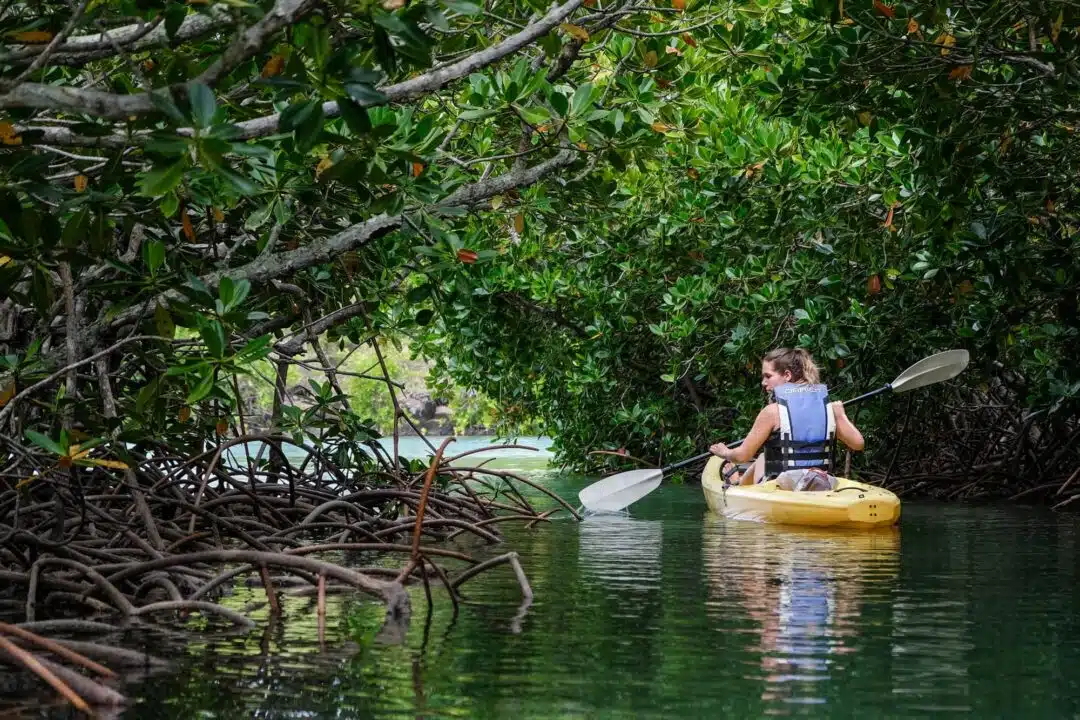
Children from around age five can join, sharing a double kayak with a parent who does most of the paddling. Reasonably mobile grandparents manage it comfortably too, and the guides are used to helping people in and out of kayaks from a shallow beach rather than a jetty. Allow a half day.
Planting Endemic Trees at Ebony Forest
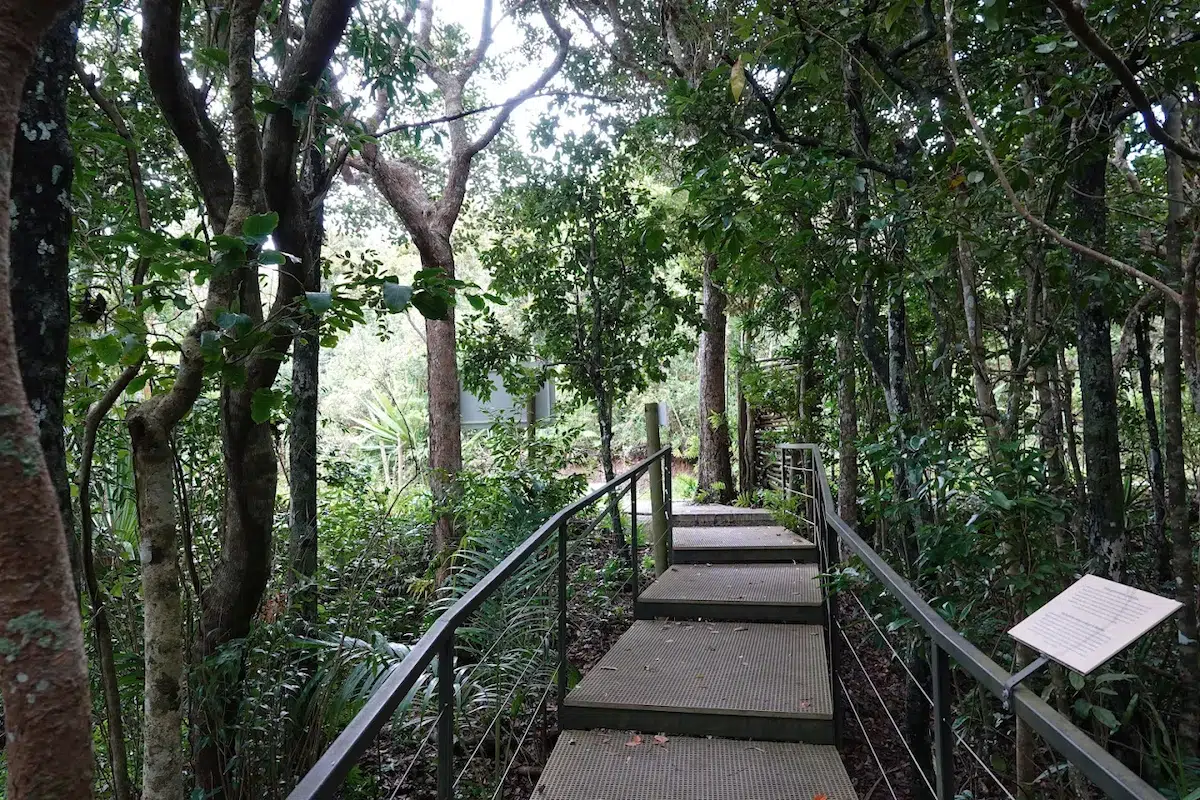
Ebony Forest, in the hills above Chamarel in the south-west, is a private conservation reserve restoring one of the last remaining stands of native ebony on the island. It is the closest a family gets to seeing what Mauritius looked like before sugar cane. Raised walkways run through the forest canopy, there is a viewpoint over the coast, and the guides are conservationists who work on the restoration every day and speak about it with real knowledge.
What makes it meaningful for children is that they can contribute. Between January and April, the wet season, families can plant native seedlings on the slopes being reforested. Outside those months, the nursery needs hands for potting and weeding. A child who has put an ebony sapling in the ground and been told it will outlive their grandchildren tends to remember it. This is regenerative tourism in practice: the visit leaves the place measurably better than it found it.
The Seven Coloured Earths of Chamarel are ten minutes away, so the two combine easily into one guided day. The dunes are viewed from a short, flat path and boardwalk, and the resident giant tortoises there are a reliable hit with younger children.
Tasting the Culture in Port Louis
Port Louis, the capital, is where the island’s mixed heritage is most concentrated, and food is the easiest way into it. A guided street food walk takes the family through the Central Market for dholl puri, gateaux piments and fresh sugar cane juice, then along the surrounding streets past Chinatown and the Jummah Mosque, one of the oldest and most beautiful buildings in the city.
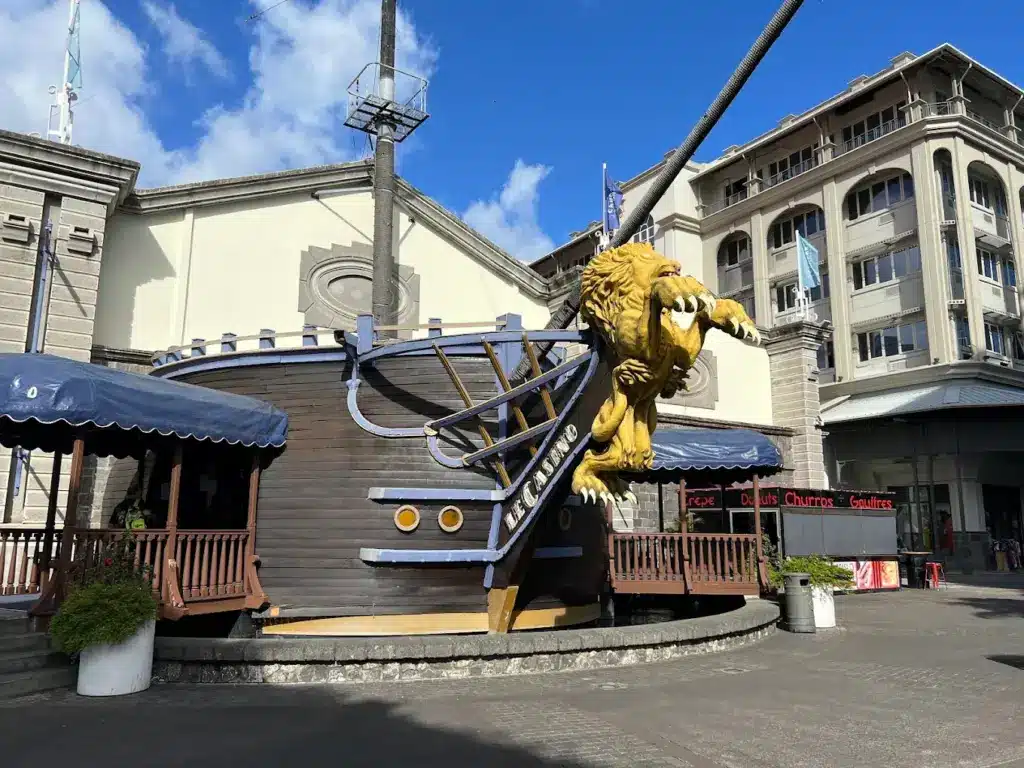
The important practical point for three generations is distance. The Central Market and the Jummah Mosque are only a five-minute walk apart, so the whole walk covers a compact area at a slow pace with plenty of stops to sit, eat and watch. Guides know which stalls suit cautious young eaters and which will please the more adventurous adults, and they handle the ordering, so nobody has to negotiate a crowded counter with a toddler. Mornings are cooler and the market is at its best; we schedule this walk early and have you back at the villa by mid-afternoon.
A Traditional Sail to Île aux Aigrettes
Île aux Aigrettes is a small coral island off the south-east coast managed by the Mauritian Wildlife Foundation. It is the site of one of the most successful island restorations in the world, and it is where several of Mauritius’s rarest species now live.
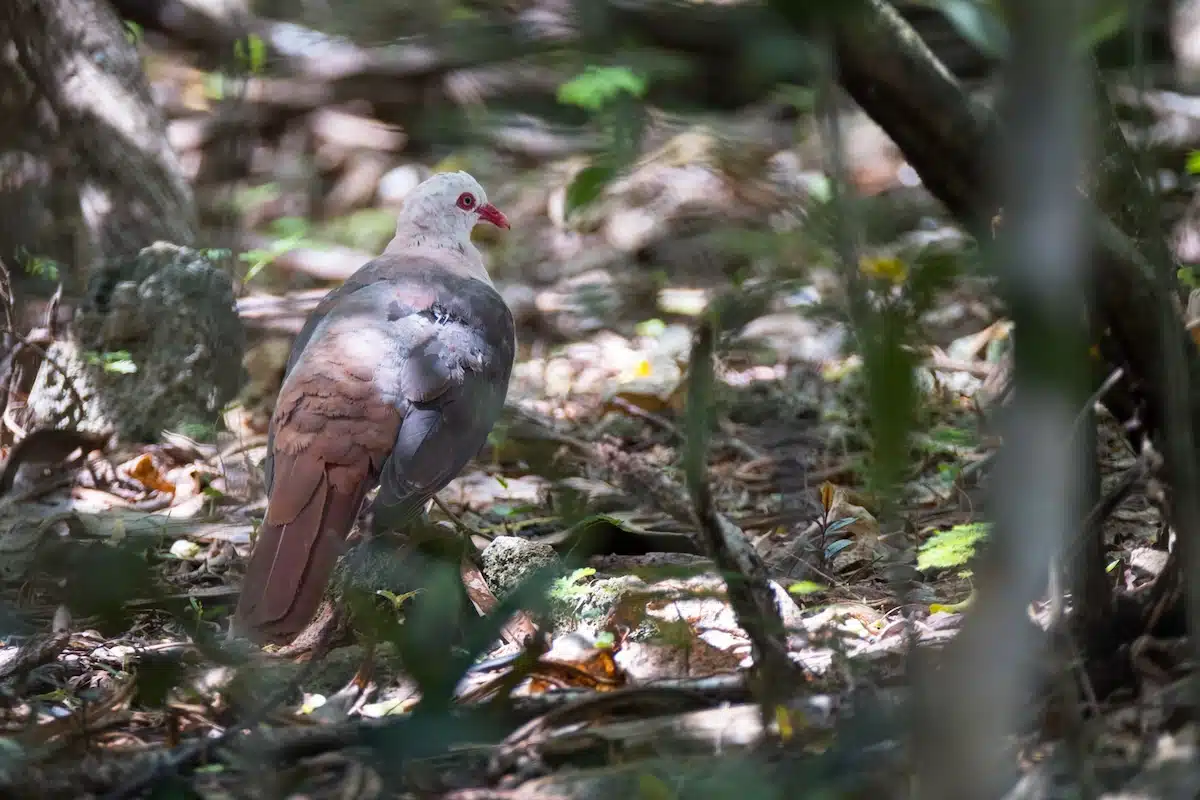
Boats leave from Pointe Jérôme, and the crossing takes a few minutes. Once on the island, a guided walk of roughly 90 minutes follows shaded trails where you will see giant Aldabra tortoises at close range, pink pigeons, which were down to around ten birds in the 1990s, and, if you are lucky, the Telfair’s skink. The guides explain the restoration work in a way that lands with children and adults alike.
One practical note: the ground is coral rag, which is sharp and uneven underfoot. Everyone in the family should wear closed sports shoes, not sandals. The pace is slow, and there are benches, so it suits grandparents well, but flip-flops will spoil it.
The Basecamp: Why a Villa is Better Than Standard Hotel Rooms
For a family of three generations, the accommodation decision matters more than any single excursion. Adjoining hotel rooms mean corridors, shared lifts, no space to gather, and a restaurant breakfast that has to be timed around a child’s mood. A villa solves most of that.
Our itinerary is based at Constance Belle Mare Plage on the east coast, in one of its two- or three-bedroom pool villas. The resort is Green Globe Platinum-certified, which means its environmental performance has been independently audited every year for well over a decade, and it sits on a long stretch of protected lagoon.
The villas give each generation its own bedroom and bathroom, with a shared living space and kitchen where the family actually spends time together. Each has a private heated pool, so early-morning swims and late-afternoon splashing happen without an audience, and the water is warm enough for grandparents even in the cooler months of July and August. Villa guests still have the full resort available: the restaurants, the spa, the golf courses and the water sports centre.
Two features matter particularly for three generations. The Kids’ Club takes children from four to eleven, with a proper programme rather than a supervised playroom, which is what makes the free days genuinely free for parents. And the beach is flat and the lagoon reef-protected, so older family members can walk straight into calm, shallow water without steps, rocks or surf. That single detail often decides whether a grandparent swims every day or not at all.
Mauritius Family Holiday: Practical Tips and FAQs
When is the best time to visit Mauritius with family?
Mauritius is a year-round destination. May to October is the cooler, drier season, with daytime temperatures in the mid-twenties and very little rain; it suits families with young children and grandparents who dislike heat. November to April is warmer and more humid, with the best conditions for swimming and snorkelling, and it coincides with the tree-planting season at Ebony Forest. The cyclone season falls in this period, but direct hits are uncommon, and the 4+4 structure absorbs a wet day without difficulty.
What language is spoken in Mauritius?
English is the official language, and French is spoken by almost everyone; Mauritian Creole is the language of daily life. Resort staff, drivers and guides move easily between all three, so there is no language barrier, and on guided days your private guide bridges any gap with market vendors or fishermen.
Is the food in Mauritius suitable for children?
The villa kitchen and a resort chef service mean breakfast can be a private family affair at whatever hour the youngest wakes up. Resort restaurants offer international menus that suit picky eaters alongside Mauritian and Indian Ocean dishes for adults who want to explore. On guided days, lunch is pre-booked at local tables we know and trust.
Do we need to hire a car in Mauritius?
You do not need to hire a car. Every guided day includes a private air-conditioned vehicle with child seats where needed, and airport transfers at both ends are arranged for you.
Is Mauritius safe for children and older travellers?
Tap water is generally safe in resorts, but bottled water is provided. No vaccinations are required beyond routine ones. Private clinics are of a high standard, and the nearest is a short drive from Belle Mare.
Call or Whatsapp us for inquiries about our journeys.
Email us your travel inquiry.
Vivea Business Park, Moka. Mauritius Island.